Writing
Engineering
Gen AI vs AI Agents vs Agentic AI
The simplest mental model to finally stop confusing the three (2026 edition) “We’re building an AI agent.”“Cool, is it agentic?”“…what’s the difference?” If you’ve sat through a…
The simplest mental model to finally stop confusing the three (2026 edition)
“We’re building an AI agent.” “Cool, is it agentic?” “…what’s the difference?”
If you’ve sat through a single AI architecture meeting in 2026, you’ve heard this exact exchange. And nobody wants to be the one to ask.
Here’s the uncomfortable truth: most teams shipping “AI agents” today are shipping glorified prompt chains. Most “agentic systems” are workflows with an LLM in the loop. And most engineers can’t cleanly distinguish Gen AI, AI Agents, and Agentic AI in an interview – because the industry itself uses these terms interchangeably.
This article fixes that. No jargon. No buzzwords. Just the mental model your brain will actually remember six months from now.
The 10-second mental model
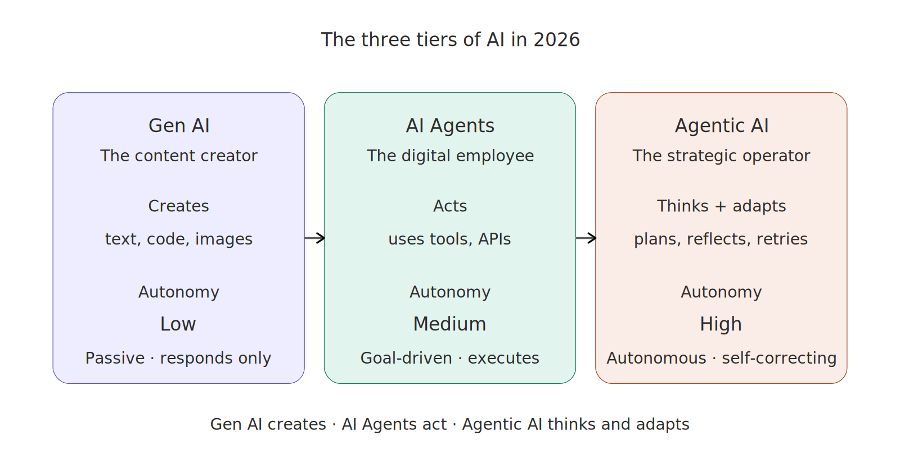
Figure 1: The three tiers of AI in 2026 - different roles, different autonomy levels.
One-line memory hack:
Gen AI creates. AI Agents act. Agentic AI thinks and adapts.
If you remember nothing else from this article, remember that line.
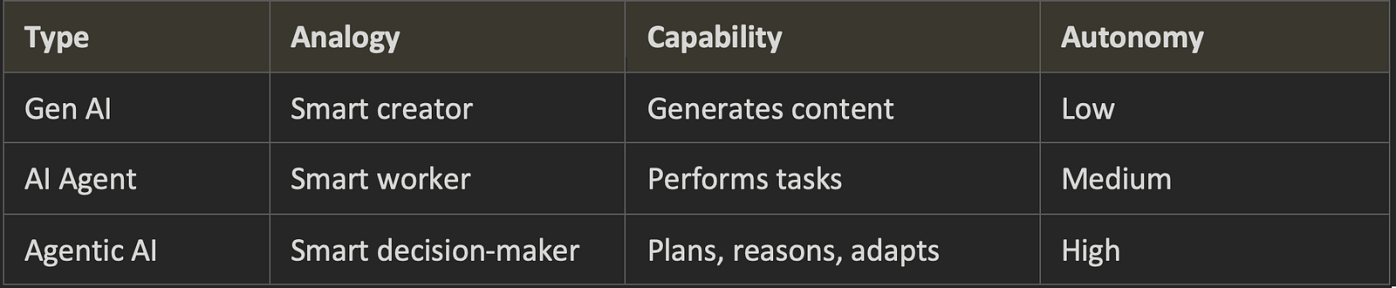
1. Generative AI - the content creator
Definition
Generative AI creates new content – text, images, code, audio, video – by learning patterns from massive datasets.
The keyword is “generate.”
Real-world examples
• ChatGPT writing your email draft • Claude is generating a Python script • Midjourney is creating a thumbnail • GitHub Copilot is completing your function • Suno is generating a 30-second jingle
How it actually works
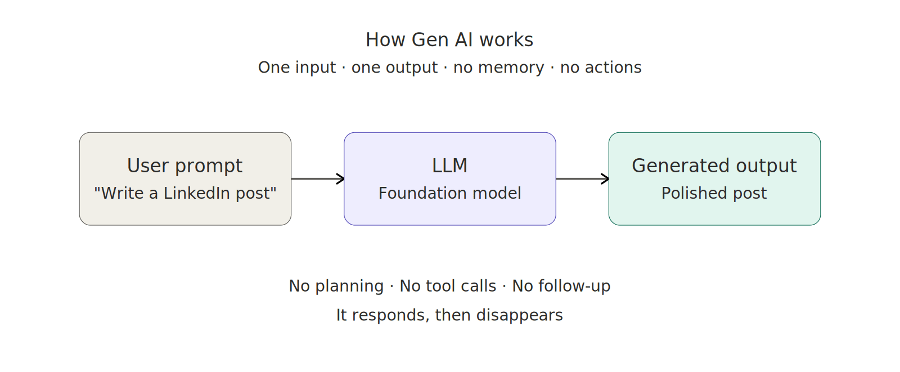
Figure 2: Gen AI is a one-shot pipeline. Prompt in, content out.
That’s the whole flow. One input. One output. No memory of yesterday. No knowledge of what happens after it responds.
Example:
• Input: _“Write a LinkedIn post about burnout.” _• Output: A polished LinkedIn post.
No planning. No execution. No tool calls. No follow-up. It responds and disappears.
Memory hack
Gen AI = passive writer waiting for instructions.
Interview-ready definition
Generative AI refers to AI systems that produce new content – text, images, code, audio – by leveraging patterns learned from large-scale training data, typically through foundation models or LLMs.
2. AI Agents - the digital employee
Now we level up. An AI Agent doesn’t just answer. It acts.
Definition
An AI Agent is a goal-oriented system that can:
1. Understand a goal 2. Decide steps 3. Use tools (APIs, browsers, databases) 4. Execute actions 5. Return results
The shift
• Gen AI answers: _“Here are 5 flights you could book.” _• AI Agent does: Searches flights → compares prices → books one → emails the confirmation.
Example prompt
“Book the cheapest flight to Dubai next month and email me the details.”
A Gen AI model gives you suggestions. An AI Agent calls a flight API, parses results, hits a payment endpoint, and triggers Gmail. It finishes the job.
Anatomy of an AI Agent
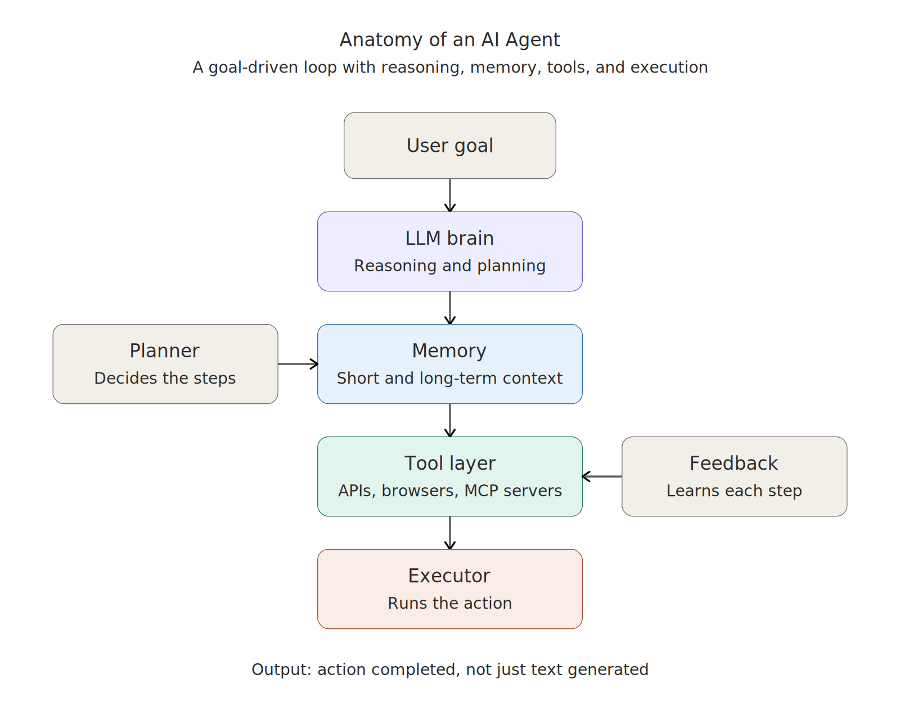
Figure 3: Inside an AI Agent - brain, memory, tools, executor, and a feedback loop
Core components
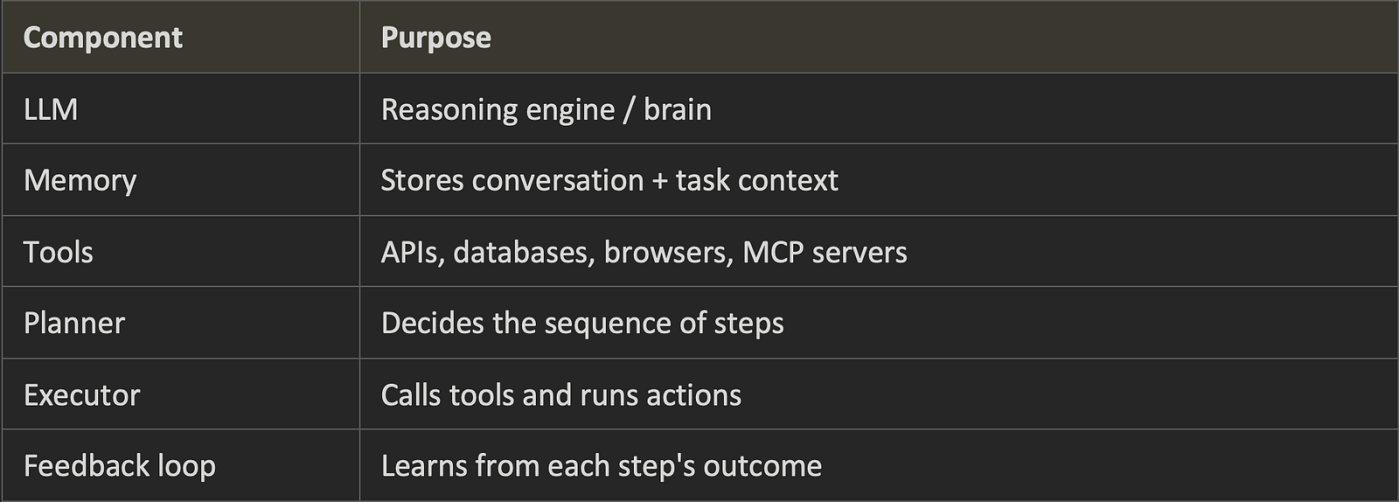
Tools an agent typically uses in 2026
Browsers (via Playwright / Browser Use), Slack, Gmail, Notion, Linear, Postgres, CRMs, calendars, Stripe, internal MCP servers, and increasingly - other agents.
Minimal code sketch
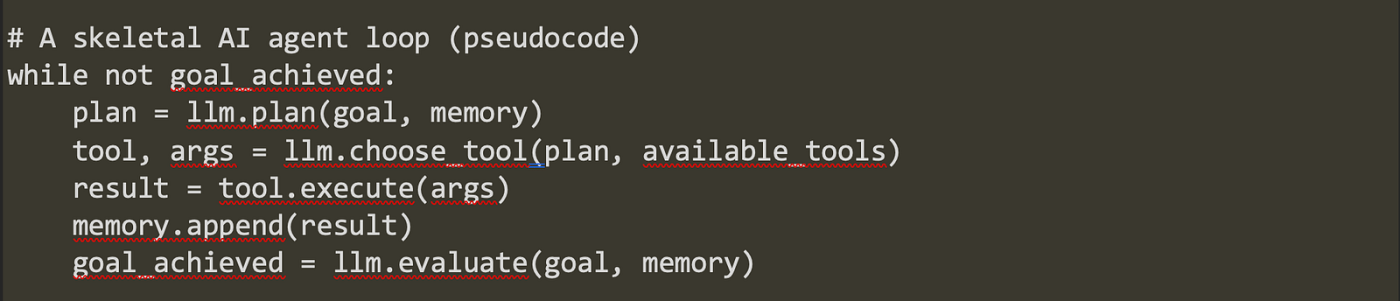
That while loop is the difference between Gen AI and an Agent.
Memory hack
AI Agent = AI Employee. Not just thinking - working.
Interview-ready definition
An AI Agent is a goal-oriented AI system that combines LLM reasoning with tools, memory, and execution capabilities to autonomously perform tasks and workflows.
3. Agentic AI – the strategic operator
This is where 90% of engineers get tripped up. Agentic AI is not “an AI agent.” It’s a behavioral property - a level of autonomy that systems exhibit.
Definition
Agentic AI refers to systems capable of: • Autonomous reasoning • Multi-step planning • Self-correction and retry logic • Long-horizon adaptation • Decision-making under uncertainty • Collaboration with other agents
The crucial distinction
AI Agent = a system component. Agentic AI = a behavioral style.
You can have a non-agentic AI agent (a simple ReAct loop), and you can have an agentic system made of multiple agents working together.
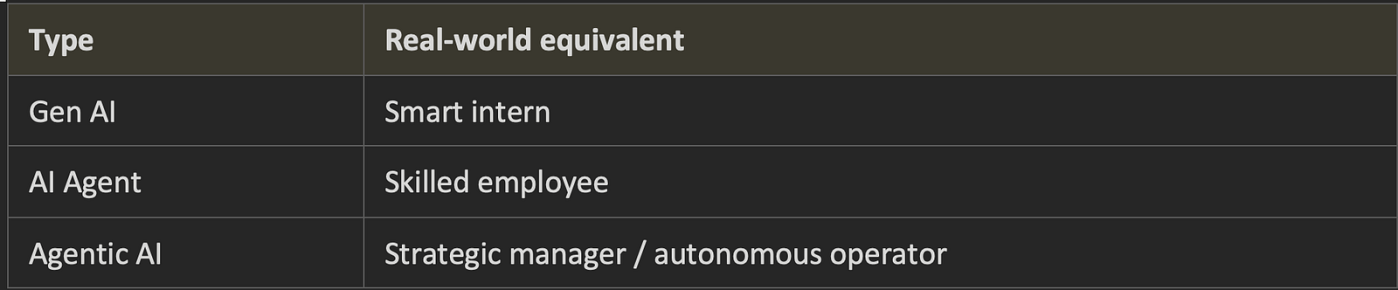
What agentic systems can do
• Break a vague goal into sub-goals • Prioritize tasks dynamically • Retry on failure with a different strategy • Reflect on output quality and revise • Coordinate with other specialized agents • Maintain persistent long-term memory • Optimize their own workflows over time
Example
You say: “Launch a podcast growth campaign.”
A true agentic system will: 1. Research your audience and competitors 2. Generate episode topics and scripts 3. Create thumbnails and clips 4. Schedule posts across platforms 5. Monitor engagement 6. Adjust strategy next week based on what worked
That last step is the agentic part. It’s a loop with reflection, not a one-shot pipeline.
Agentic AI architecture
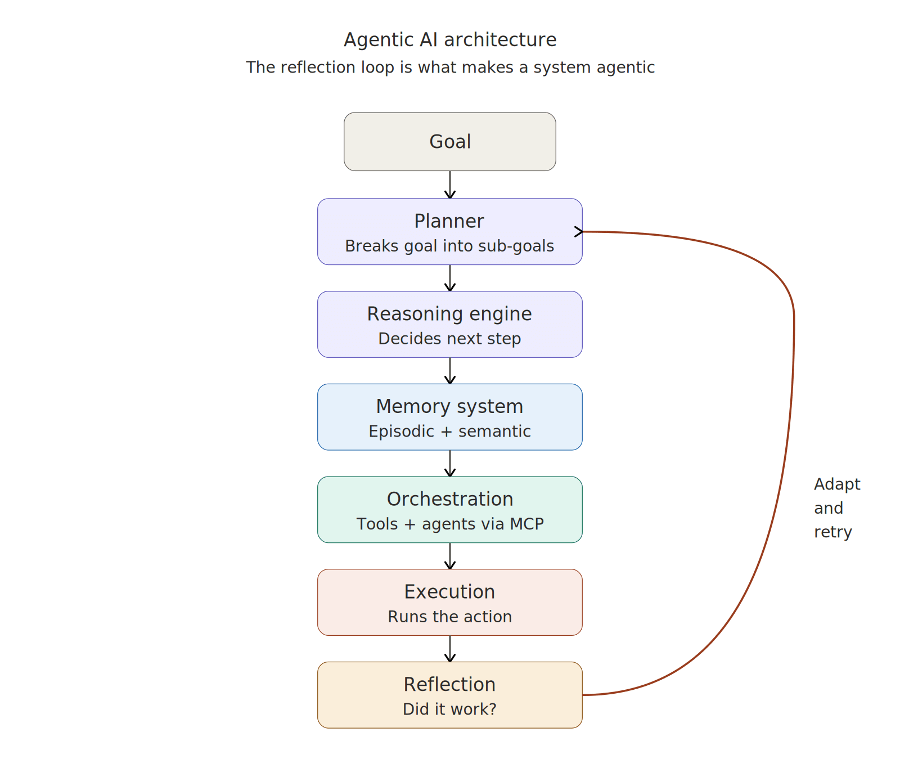
Figure 4: The reflection + adaptation loop is what makes a system agentic.
The reflection + adaptation loop is what makes a system “agentic” rather than just “an agent.”
Memory hack
Agentic AI = Autonomy + Adaptation + Orchestration.
Interview-ready definition
Agentic AI describes AI systems exhibiting autonomous decision-making, multi-step planning, self-correction, and iterative reasoning – typically implemented via orchestrated agents with memory, tool access, and reflection loops.
The evolution path
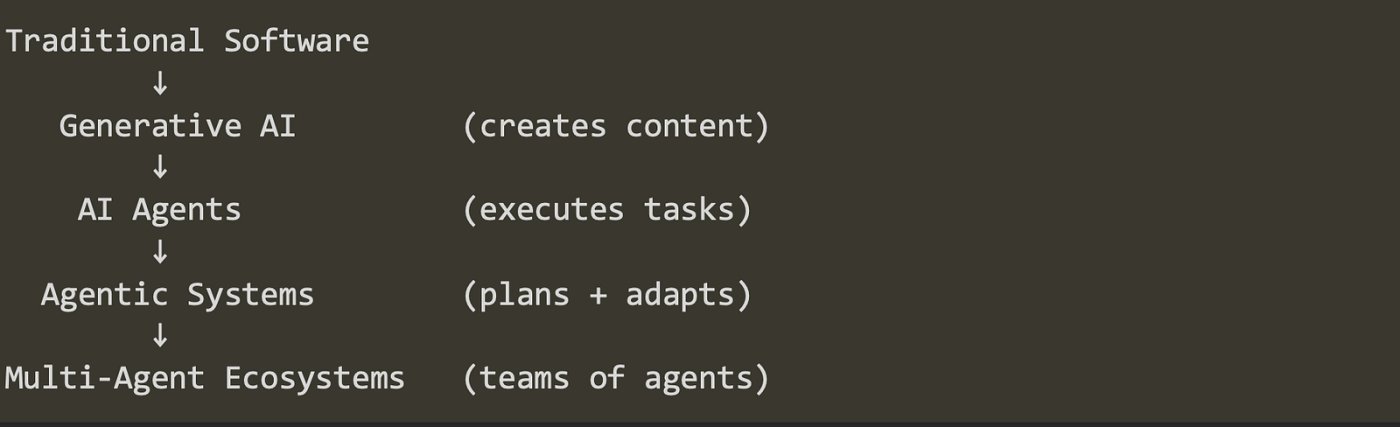
We are mid-transition from step 3 to step 4 right now.
Multi-agent systems – the next layer
Instead of one super-agent, you compose specialized agents that collaborate. It mirrors how humans organize companies.
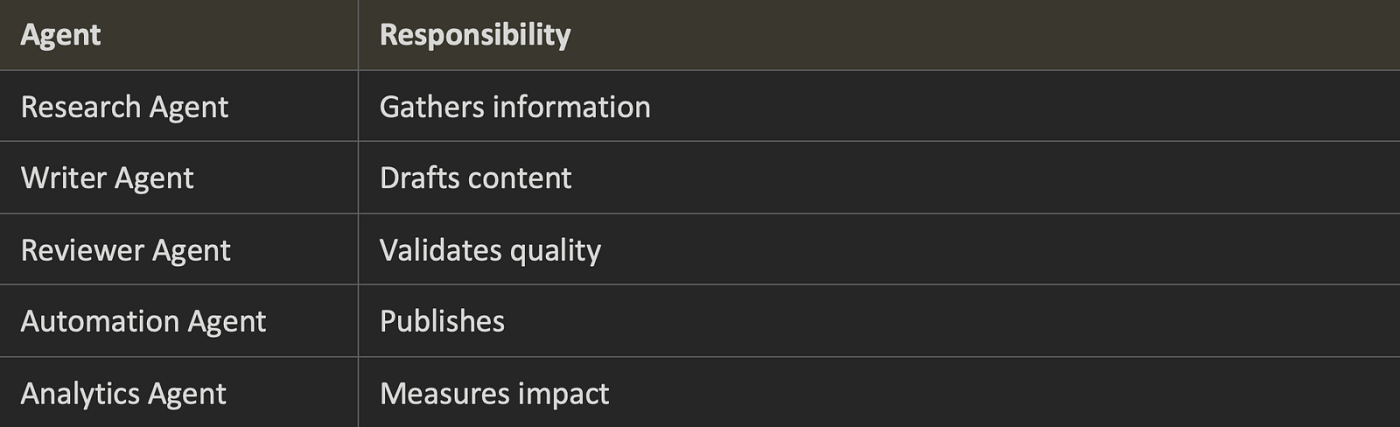
A coordinator (often called an orchestrator or supervisor agent) routes tasks between them.
Production architecture (2026)
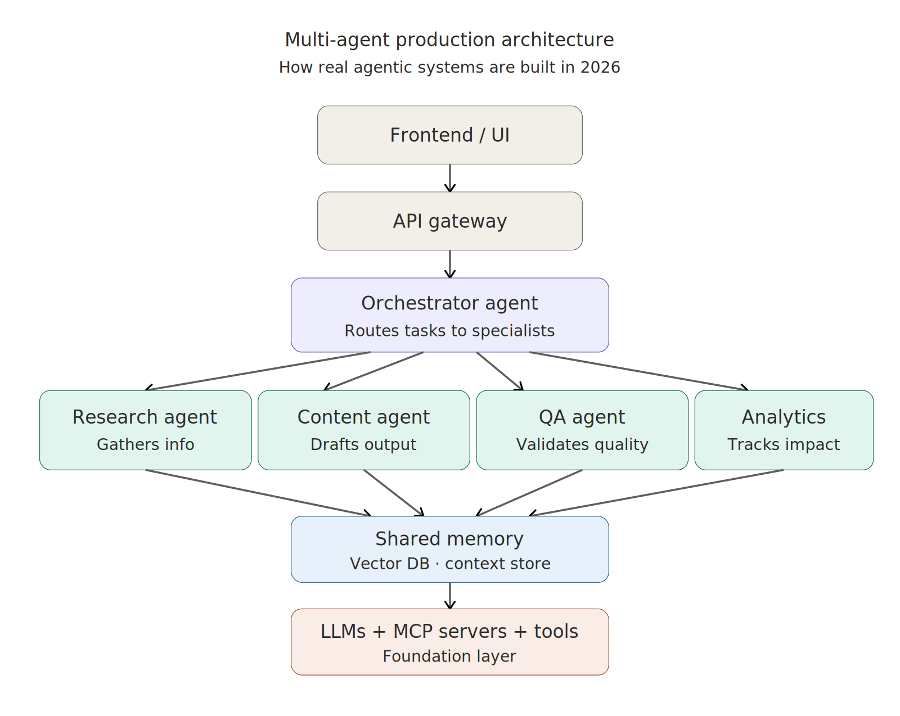
Figure 5: How real agentic systems are built in 2026 - a team of agents, not one mega-agent.
This is what production-grade agentic systems actually look like in 2026 – not one mega-agent, but a coordinated team.
The 2026 agentic stack
This is what teams are actually using right now:
Foundation models
• Claude (Opus 4.7, Sonnet 4.6, Haiku 4.5) • GPT-5 family • Gemini 2.5 series • Llama 4 / open-source models
Orchestration frameworks
• LangGraph (stateful graphs) • CrewAI (role-based agents) • OpenAI Agents SDK • Pydantic AI (typed agents) • AutoGen (Microsoft)
The protocol layer (the big 2025–26 shift)
• MCP (Model Context Protocol) - Anthropic’s open standard, now adopted across the ecosystem. Lets agents plug into tools the way USB-C plugs into devices. If you’re not building with MCP servers in 2026, you’re already behind.
Memory & retrieval
• Pinecone, Weaviate, Chroma, Qdrant, pgvector
Execution & tools
• Browser Use / Playwright for web actions • Computer Use APIs (Claude, OpenAI) • Internal MCP servers for company data • E2B / Modal for sandboxed code execution
Interview cheat sheet
**“What is Gen AI?” **AI focused on generating new content - text, code, images, audio - using foundation models.
**“What is an AI Agent?” **A goal-driven AI system that reasons, uses tools, and executes tasks autonomously.
**“What is Agentic AI?” **AI systems exhibiting autonomous decision-making, planning, adaptation, and iterative reasoning.
**“Gen AI vs AI Agents?” **Gen AI generates outputs. Agents execute tasks using tools and workflows.
**“AI Agents vs Agentic AI?” **Agents are implementations. Agentic AI describes the broader autonomous behavioral capability.
**“What is MCP?” **Model Context Protocol – an open standard for connecting LLMs to external tools and data sources. Think of it as the HTTP of the agent era.
The memory hack that sticks
Gen AI → Creates AI Agents → Act Agentic AI → Think + Adapt
Or even shorter:
Gen AI = Content AI Agents = Actions Agentic AI = Autonomy
The hard truth most people won’t say
Most companies in 2026 are not building Agentic AI.
They’re: • Wrapping APIs around LLMs • Adding linear workflows • Slapping “agentic” on the marketing page
True agentic systems require planning, memory, reflection, orchestration, and adaptation - not just an LLM call inside a for loop. The shift happening right now is the move from: “AI that responds” → “AI that operates.”
That’s not a feature update. That’s a new category of software. And the engineers who internalize the difference – between Gen AI, AI Agents, and Agentic AI – will be the ones building it.
If this helped clarify the mess, drop a 👏 or a comment telling me which framework you’re betting on for 2026. I read every reply.
Explore More:
Website: kashishmahant.com Podcast: Spotify | Amazon | YouTube | Apple Podcasts Instagram: @positively___yours Email: k@kashishmahant.com LinkedIn: https://www.linkedin.com/in/kashish-mahant
Keywords
- Agentic AI
- AI Agents
- AI Engineering
- Artificial Intelligence
- Generative AI
- LLM